Buy escape-room.eu ?
We are moving the project
escape-room.eu .
Are you interested in purchasing the domain
escape-room.eu ?
domain@kv-gmbh.de · 0541-91531010
Buy escape-room.eu ?
What are sensory cells, sensory organs, and senses?
Sensory cells are specialized cells that detect and respond to specific stimuli, such as light, sound, touch, taste, and smell. These cells are found in sensory organs, which are structures in the body that contain sensory cells and are responsible for detecting and transmitting sensory information to the brain. The senses, on the other hand, are the physiological capacities of organisms that provide data for perception. They include sight, hearing, touch, taste, and smell, and are essential for experiencing and interacting with the environment. **
What is the difference between a primary sensory cell, a secondary sensory cell, and a sensory nerve cell?
Primary sensory cells are specialized cells that directly detect stimuli from the environment, such as light, sound, or touch. Secondary sensory cells receive signals from primary sensory cells and transmit them to the central nervous system. Sensory nerve cells, also known as sensory neurons, are responsible for transmitting the signals from secondary sensory cells to the brain, where they are processed and interpreted. In summary, primary sensory cells detect stimuli, secondary sensory cells relay the signals, and sensory nerve cells transmit the signals to the brain for processing. **


Similar search terms for Sensory
Top-Angebote
Products related to Sensory:
-
Uplifted Finds Cognitive Challenge Interactive Puzzle Station Cognitive Challenge Interactive Puzzle StationTransform mealtime into a stimulating mental workout with the CognitiveChallenge Puzzle Station, a highutility enrichment module engineered with progressivedifficulty logic. This professionalgrade feeder features a multichambered architecture that...119,97 $*Shipping: 0,00 $Secure redirect to the provider
-
Viper The Twyford Code by Janice Hallett - Award-Winning Crime Thriller - Paperback - Sunday Times Bestseller, Puzzle MysteryThe Twyford Code by Janice Hallett is a Sunday Times bestselling puzzle-thriller, crowned Crime and Thriller Book of the Year at the British Book Awards 2023. This ingenious mystery follows Steven Smith as he retraces a childhood discovery that changed his life forever. Told through a collection of transcribed audio files, it blends nostalgic children's-book intrigue with a razor-sharp modern investigation. The story begins with Steven Smith, a boy in a school for children with learning difficulties, who finds a battered copy of a novel by disgraced children's author Edith Twyford. The margins of the book are filled with strange, indecipherable annotations that fascinate Steven. He brings the book to his English teacher, Miss Iles, who becomes convinced the markings form a hidden code pointing to a long-buried secret. This is a must-read for fans of clever, code-cracking crime fiction and immersive book club discussions. Published by Viper, a division of Profile Books, this paperback edition features the ISBN 9781788165334.5,99 £*Shipping: 2,99 £Secure redirect to the provider
-
Market Central Quick Push Pop Game Light Up Fidget Toy Interactive Sensory Puzzle Game Quick Push Pop Game Light Up Fidget Toy Interactive Sensory Puzzle GameTurn everyday downtime into fastpaced handson fun with this quick push pop game for kids and adults. Lightup prompts encourage players to press the matching bubbles quickly while building focus reaction speed and handeye coordination. The satisfying...64,97 $*Shipping: 0,00 $Secure redirect to the provider
-
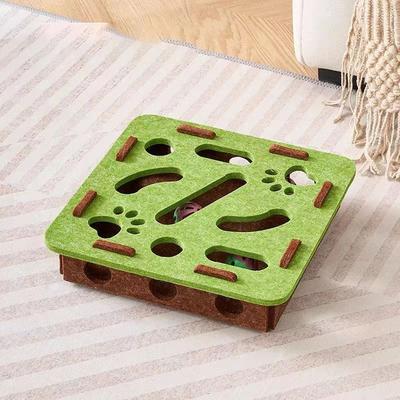
Uplift Essentials Mastermind Interactive Cat Puzzle Maze & Sensory Brain Teaser green"Unlock your cats inner genius with the Mastermind Interactive Puzzle Maze. Designed to challenge even the smartest felines, this multichambered ""brain teaser"" box turns treattime into a rewarding scavenger hunt. Featuring various strategic openings..."59,97 $*Shipping: 0,00 $Secure redirect to the provider



-
Are receptors sensory cells?
Receptors are not sensory cells themselves, but they are specialized proteins located on the surface of sensory cells. These receptors are responsible for detecting and responding to specific stimuli, such as light, sound, taste, or smell. When a receptor is activated by a stimulus, it triggers a series of biochemical reactions within the sensory cell, ultimately leading to the generation of a sensory signal that can be transmitted to the brain for processing. Therefore, while receptors are not sensory cells, they play a crucial role in the sensory process by detecting and transducing stimuli into neural signals. **
-
What is sensory perception?
Sensory perception refers to the process of receiving and interpreting information from the environment through the senses. This includes the five main senses of sight, hearing, touch, taste, and smell, as well as other sensory experiences such as balance, proprioception, and temperature. The brain then processes this sensory information to create a perception of the world around us, allowing us to interact with and understand our surroundings. Sensory perception is essential for everyday functioning and plays a crucial role in how we experience and navigate the world. **
-
How does sensory development progress?
Sensory development progresses through a series of stages, beginning with basic sensory experiences such as touch, taste, and smell in infancy. As children grow, they develop more refined sensory abilities, such as improved vision and hearing, and begin to integrate sensory information to make sense of their environment. This process continues into adolescence and adulthood, with individuals becoming more adept at interpreting and responding to sensory stimuli. Overall, sensory development progresses from basic sensory experiences to more complex and integrated sensory abilities as individuals mature. **
-
What are artificial sensory organs?
Artificial sensory organs are devices designed to mimic the functions of natural sensory organs, such as the eyes, ears, and skin. These devices use advanced technology to detect and process sensory information, allowing individuals to perceive and interact with their environment in a way that is similar to natural sensory organs. Artificial sensory organs have the potential to enhance or restore sensory capabilities for individuals with disabilities, as well as to provide new sensory experiences for people without impairments. These technologies have the potential to revolutionize healthcare and human-computer interaction. **


What are sensory nerve cells?
Sensory nerve cells, also known as sensory neurons, are specialized cells that transmit information from the body's sensory organs (such as the skin, eyes, ears, nose, and tongue) to the central nervous system. These cells are responsible for detecting various stimuli, such as touch, temperature, pain, and pressure, and converting these stimuli into electrical signals that can be interpreted by the brain. Sensory nerve cells play a crucial role in allowing us to perceive and respond to our environment. **
Why is sensory transduction necessary?
Sensory transduction is necessary because it allows the body to convert various forms of environmental stimuli, such as light, sound, touch, and chemical signals, into electrical signals that can be interpreted by the nervous system. This process is essential for the body to perceive and respond to its surroundings, allowing for the detection of potential dangers, the regulation of bodily functions, and the experience of sensations such as taste, smell, and touch. Without sensory transduction, the body would not be able to effectively interact with its environment and respond to changes in its surroundings. **
Top-Angebote
Products related to Sensory:
-
Snug & Styled CalmStars Sensory Activity Board For Kids & Adults Silicone Sensory Toy Stress Relief Puzzle blueTurn restless moments into calm, focused play with the sensory activity board designed to engage busy hands and curious minds. Whether you're helping a child improve concentration or looking for a relaxing break during a hectic day, this interactive...44,97 $*Shipping: 0,00 $Secure redirect to the provider
-
Smart Shopping Spot Falling Sticks Catch Toy, Sensory Integration Training, Reflex Challenge dark BlueEngage and Challenge Your Reflexes The Catch Sticks Game is a perfect blend of fun and skillbuilding, ideal for those looking to enhance their reaction training and reflex abilities. The game requires quick thinking and fast reflexes to catch...39,97 $*Shipping: 0,00 $Secure redirect to the provider
-
Uplifted Finds Cognitive Challenge Interactive Puzzle Station Cognitive Challenge Interactive Puzzle StationTransform mealtime into a stimulating mental workout with the CognitiveChallenge Puzzle Station, a highutility enrichment module engineered with progressivedifficulty logic. This professionalgrade feeder features a multichambered architecture that...119,97 $*Shipping: 0,00 $Secure redirect to the provider
-
Viper The Twyford Code by Janice Hallett - Award-Winning Crime Thriller - Paperback - Sunday Times Bestseller, Puzzle MysteryThe Twyford Code by Janice Hallett is a Sunday Times bestselling puzzle-thriller, crowned Crime and Thriller Book of the Year at the British Book Awards 2023. This ingenious mystery follows Steven Smith as he retraces a childhood discovery that changed his life forever. Told through a collection of transcribed audio files, it blends nostalgic children's-book intrigue with a razor-sharp modern investigation. The story begins with Steven Smith, a boy in a school for children with learning difficulties, who finds a battered copy of a novel by disgraced children's author Edith Twyford. The margins of the book are filled with strange, indecipherable annotations that fascinate Steven. He brings the book to his English teacher, Miss Iles, who becomes convinced the markings form a hidden code pointing to a long-buried secret. This is a must-read for fans of clever, code-cracking crime fiction and immersive book club discussions. Published by Viper, a division of Profile Books, this paperback edition features the ISBN 9781788165334.5,99 £*Shipping: 2,99 £Secure redirect to the provider
-
What are sensory cells, sensory organs, and senses?
Sensory cells are specialized cells that detect and respond to specific stimuli, such as light, sound, touch, taste, and smell. These cells are found in sensory organs, which are structures in the body that contain sensory cells and are responsible for detecting and transmitting sensory information to the brain. The senses, on the other hand, are the physiological capacities of organisms that provide data for perception. They include sight, hearing, touch, taste, and smell, and are essential for experiencing and interacting with the environment. **
-
What is the difference between a primary sensory cell, a secondary sensory cell, and a sensory nerve cell?
Primary sensory cells are specialized cells that directly detect stimuli from the environment, such as light, sound, or touch. Secondary sensory cells receive signals from primary sensory cells and transmit them to the central nervous system. Sensory nerve cells, also known as sensory neurons, are responsible for transmitting the signals from secondary sensory cells to the brain, where they are processed and interpreted. In summary, primary sensory cells detect stimuli, secondary sensory cells relay the signals, and sensory nerve cells transmit the signals to the brain for processing. **
-
Are receptors sensory cells?
Receptors are not sensory cells themselves, but they are specialized proteins located on the surface of sensory cells. These receptors are responsible for detecting and responding to specific stimuli, such as light, sound, taste, or smell. When a receptor is activated by a stimulus, it triggers a series of biochemical reactions within the sensory cell, ultimately leading to the generation of a sensory signal that can be transmitted to the brain for processing. Therefore, while receptors are not sensory cells, they play a crucial role in the sensory process by detecting and transducing stimuli into neural signals. **
-
What is sensory perception?
Sensory perception refers to the process of receiving and interpreting information from the environment through the senses. This includes the five main senses of sight, hearing, touch, taste, and smell, as well as other sensory experiences such as balance, proprioception, and temperature. The brain then processes this sensory information to create a perception of the world around us, allowing us to interact with and understand our surroundings. Sensory perception is essential for everyday functioning and plays a crucial role in how we experience and navigate the world. **
Similar search terms for Sensory
-
Market Central Quick Push Pop Game Light Up Fidget Toy Interactive Sensory Puzzle Game Quick Push Pop Game Light Up Fidget Toy Interactive Sensory Puzzle GameTurn everyday downtime into fastpaced handson fun with this quick push pop game for kids and adults. Lightup prompts encourage players to press the matching bubbles quickly while building focus reaction speed and handeye coordination. The satisfying...64,97 $*Shipping: 0,00 $Secure redirect to the provider
-
Uplift Essentials Mastermind Interactive Cat Puzzle Maze & Sensory Brain Teaser green"Unlock your cats inner genius with the Mastermind Interactive Puzzle Maze. Designed to challenge even the smartest felines, this multichambered ""brain teaser"" box turns treattime into a rewarding scavenger hunt. Featuring various strategic openings..."59,97 $*Shipping: 0,00 $Secure redirect to the provider
-
Snug & Styled CalmStars Sensory Activity Board For Kids & Adults Silicone Sensory Toy Stress Relief Puzzle pinkTurn restless moments into calm, focused play with the sensory activity board designed to engage busy hands and curious minds. Whether you're helping a child improve concentration or looking for a relaxing break during a hectic day, this interactive...44,97 $*Shipping: 0,00 $Secure redirect to the provider
-
Snug & Styled CalmStars Sensory Activity Board For Kids & Adults Silicone Sensory Toy Stress Relief Puzzle rose RedTurn restless moments into calm, focused play with the sensory activity board designed to engage busy hands and curious minds. Whether you're helping a child improve concentration or looking for a relaxing break during a hectic day, this interactive...44,97 $*Shipping: 0,00 $Secure redirect to the provider
-
How does sensory development progress?
Sensory development progresses through a series of stages, beginning with basic sensory experiences such as touch, taste, and smell in infancy. As children grow, they develop more refined sensory abilities, such as improved vision and hearing, and begin to integrate sensory information to make sense of their environment. This process continues into adolescence and adulthood, with individuals becoming more adept at interpreting and responding to sensory stimuli. Overall, sensory development progresses from basic sensory experiences to more complex and integrated sensory abilities as individuals mature. **
-
What are artificial sensory organs?
Artificial sensory organs are devices designed to mimic the functions of natural sensory organs, such as the eyes, ears, and skin. These devices use advanced technology to detect and process sensory information, allowing individuals to perceive and interact with their environment in a way that is similar to natural sensory organs. Artificial sensory organs have the potential to enhance or restore sensory capabilities for individuals with disabilities, as well as to provide new sensory experiences for people without impairments. These technologies have the potential to revolutionize healthcare and human-computer interaction. **
-
What are sensory nerve cells?
Sensory nerve cells, also known as sensory neurons, are specialized cells that transmit information from the body's sensory organs (such as the skin, eyes, ears, nose, and tongue) to the central nervous system. These cells are responsible for detecting various stimuli, such as touch, temperature, pain, and pressure, and converting these stimuli into electrical signals that can be interpreted by the brain. Sensory nerve cells play a crucial role in allowing us to perceive and respond to our environment. **
-
Why is sensory transduction necessary?
Sensory transduction is necessary because it allows the body to convert various forms of environmental stimuli, such as light, sound, touch, and chemical signals, into electrical signals that can be interpreted by the nervous system. This process is essential for the body to perceive and respond to its surroundings, allowing for the detection of potential dangers, the regulation of bodily functions, and the experience of sensations such as taste, smell, and touch. Without sensory transduction, the body would not be able to effectively interact with its environment and respond to changes in its surroundings. **
* All prices are inclusive of VAT and, if applicable, plus shipping costs. The offer information is based on the details provided by the respective shop and is updated through automated processes. Real-time updates do not occur, so deviations can occur in individual cases. ** Note: Parts of this content were created by AI.