Buy escape-room.eu ?
We are moving the project
escape-room.eu .
Are you interested in purchasing the domain
escape-room.eu ?
domain@kv-gmbh.de · 0541-91531010
Buy escape-room.eu ?
What are the differences between covalent bonds, metallic bonds, and ionic bonds?
Covalent bonds are formed when two atoms share electrons, resulting in a strong bond between the atoms. Metallic bonds occur between metal atoms, where the electrons are delocalized and free to move throughout the structure, creating a strong bond. Ionic bonds are formed between a metal and a nonmetal, where one atom transfers electrons to the other, resulting in the formation of positively and negatively charged ions that are attracted to each other. Overall, covalent bonds involve electron sharing, metallic bonds involve electron delocalization, and ionic bonds involve electron transfer. **
Do CO bonds form with other CO bonds?
No, CO bonds do not typically form with other CO bonds. Carbon monoxide (CO) is a stable molecule with a triple bond between the carbon and oxygen atoms. This triple bond is strong and does not readily form additional bonds with other CO molecules. Instead, CO molecules tend to interact with other types of molecules through various types of chemical reactions. **
Similar search terms for Bonds
Top-Angebote
Products related to Bonds:
-
Matrix Instacure Build-A-Bond Mighty Bonds Full Routine PackYou deserve the full package! So, what are you waiting for? Stock up and save on this Mega Pack from Matrix, including: Instacure Build-A-Bond Mighty Bonds Shampoo 300ml, Conditioner 300ml, Instant Revival Liquid Mask 250ml, Super Sealing Leave-In Balm 75ml, Anti Breakage Leave-In 150ml. Healthy hair starts from within, and all of these Matrix Instacure Build-A-Bond Might Bond products heal your locks from the inside out! All five products are infused with citric acid, which penetrates deep into the hair fiber to strengthen and reinforce damaged hair strands from within. Ingredients: Shampoo: aqua / water / eau, decyl glucoside, sodium cocoyl isethionate, cocamidopropyl betaine, citric acid, sodium hydroxide, panthenol, parfum / fragrance, glycerin, dimethicone, peg-150 distearate, ppg-5-ceteth-20, sodium benzoate, sodium chloride, peg-55 propylene glycol oleate, propylene glycol, carbomer, limonene, coco-caprylate/caprate, polyquaternium-67, salicylic acid, amodimethicone, sodium phytate, glycol distearate, squalane, coco-betaine, linalool, acrylates/beheneth-25 methacrylate copolymer, citronellol, trideceth-6, benzyl alcohol, alcohol, cetrimonium chloride, ci 17200 / red 33 Conditioner: aqua / water / eau, cetearyl alcohol, propylene glycol, behentrimonium chloride, glycerin, cetyl esters, dimethicone, peg/ppg-4/12 dimethicone, amodimethicone, parfum / fragrance, isopropyl alcohol, dicetyldimonium chloride, citric acid, phenoxyethanol, limonene, isopropyl myristate, hydroxypropyl guar, squalane, linalool, trideceth-10, coco-betaine, citronellol, cetrimonium chloride, peg-100 stearate, steareth-6, sodium chloride, benzyl alcohol, trideceth-3, acetic acid, trisodium hedta, pentaerythrityl tetra-di-t-butyl hydroxyhydrocinnamate, ci 17200 / red 33 Mask: aqua / water / eau, cetearyl alcohol, behentrimonium chloride, dimethicone, isopropyl alcohol, amodimethicone, sodium citrate, glycerin, citric acid, c15-19 alkane, dicetyldimonium chloride, parfum / fragrance, aminopropyl dimethicone, phenoxyethanol, cetyl esters, hydroxypropyl guar, limonene, squalane, trideceth-6, linalool, dilauryl thiodipropionate, cetrimonium chloride, citronellol, benzyl alcohol, trisodium hedta, ci 17200 / red 33 Leave-In Balm: aqua / water / eau, dimethicone, cetearyl alcohol, amodimethicone, phenoxyethanol, polyquaternium-37, dimethiconol, trideceth-5, propylene glycol dicaprylate/dicaprate, steareth-20, cetyl hydroxyethylcellulose, parfum / fragrance, glycerin, citric acid, limonene, ppg-1 trideceth-6, trideceth-10, squalane, sodium hydroxide, linalool, chlorhexidine digluconate, acrylates/stearyl methacrylate copolymer, sorbitan oleate, acetic acid, citronellol, hydrated silica, silica dimethyl silylate, disodium phosphate, benzyl alcohol, sodium phosphate, edta, ci 17200 / red 33 Anti Breakage Leave-In: aqua / water / eau, dimethicone, cetearyl alcohol, amodimethicone, phenoxyethanol, polyquaternium-37, dimethiconol, trideceth-5, propylene glycol dicaprylate/dicaprate,...70,48 £*Shipping: 0,00 £Secure redirect to the provider
-
Matrix Instacure Build-A-Bond Mighty Bonds Shampoo 300ml & Instacure BStock up and save with this Matrix Instacure Build-A-Bond Mighty Bonds Shampoo 300ml & Instacure Build-A-Bond Mighty Care Conditioner 300ml Duo! Healthy hair starts from within, and this Matrix Instacure Build-A-Bond Mighty Bonds Shampoo and Conditioner gets straight to work to repair your hair. The luxuriously textured shampoo forms a rich lather and gets to work immediately on mega damaged hair and the luxuriously creamy conditioner gets straight to work with key ingredient Squalane, which works on the hairs surface to soften and smooth each strand for a silky finish! Both are infused with citric acid, this conditioner penetrates deep into the hair fiber to strengthen and reinforce damaged hair strands from within. Ingredients: Shampoo: aqua / water / eau, decyl glucoside, sodium cocoyl isethionate, cocamidopropyl betaine, citric acid, sodium hydroxide, panthenol, parfum / fragrance, glycerin, dimethicone, peg-150 distearate, ppg-5-ceteth-20, sodium benzoate, sodium chloride, peg-55 propylene glycol oleate, propylene glycol, carbomer, limonene, coco-caprylate/caprate, polyquaternium-67, salicylic acid, amodimethicone, sodium phytate, glycol distearate, squalane, coco-betaine, linalool, acrylates/beheneth-25 methacrylate copolymer, citronellol, trideceth-6, benzyl alcohol, alcohol, cetrimonium chloride, ci 17200 / red 33 Conditioner: aqua / water / eau, cetearyl alcohol, propylene glycol, behentrimonium chloride, glycerin, cetyl esters, dimethicone, peg/ppg-4/12 dimethicone, amodimethicone, parfum / fragrance, isopropyl alcohol, dicetyldimonium chloride, citric acid, phenoxyethanol, limonene, isopropyl myristate, hydroxypropyl guar, squalane, linalool, trideceth-10, coco-betaine, citronellol, cetrimonium chloride, peg-100 stearate, steareth-6, sodium chloride, benzyl alcohol, trideceth-3, acetic acid, trisodium hedta, pentaerythrityl tetra-di-t-butyl hydroxyhydrocinnamate, ci 17200 / red 3324,16 £*Shipping: 0,00 £Secure redirect to the provider
-
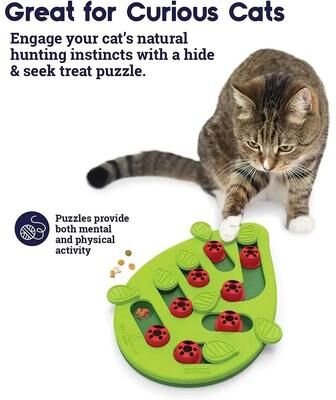
Uplifted Finds Cognitive Challenge Interactive Puzzle Station Cognitive Challenge Interactive Puzzle StationTransform mealtime into a stimulating mental workout with the CognitiveChallenge Puzzle Station, a highutility enrichment module engineered with progressivedifficulty logic. This professionalgrade feeder features a multichambered architecture that...119,97 $*Shipping: 0,00 $Secure redirect to the provider
-
Viper The Twyford Code by Janice Hallett - Award-Winning Crime Thriller - Paperback - Sunday Times Bestseller, Puzzle MysteryThe Twyford Code by Janice Hallett is a Sunday Times bestselling puzzle-thriller, crowned Crime and Thriller Book of the Year at the British Book Awards 2023. This ingenious mystery follows Steven Smith as he retraces a childhood discovery that changed his life forever. Told through a collection of transcribed audio files, it blends nostalgic children's-book intrigue with a razor-sharp modern investigation. The story begins with Steven Smith, a boy in a school for children with learning difficulties, who finds a battered copy of a novel by disgraced children's author Edith Twyford. The margins of the book are filled with strange, indecipherable annotations that fascinate Steven. He brings the book to his English teacher, Miss Iles, who becomes convinced the markings form a hidden code pointing to a long-buried secret. This is a must-read for fans of clever, code-cracking crime fiction and immersive book club discussions. Published by Viper, a division of Profile Books, this paperback edition features the ISBN 9781788165334.5,99 £*Shipping: 2,99 £Secure redirect to the provider



-
Why are intermolecular bonds weaker than electron pair bonds?
Intermolecular bonds are weaker than electron pair bonds because they involve interactions between molecules rather than within a single molecule. In intermolecular bonds, the attractive forces between molecules are generally weaker than the covalent bonds that hold atoms together within a molecule. Additionally, intermolecular bonds are typically temporary and can be easily broken, whereas electron pair bonds are strong and stable. Overall, the weaker nature of intermolecular bonds allows molecules to move and interact with each other more freely. **
-
Why are intermolecular bonds generally weaker than covalent bonds?
Intermolecular bonds are generally weaker than covalent bonds because they involve interactions between molecules rather than within a single molecule. Covalent bonds involve the sharing of electrons between atoms, creating strong bonds within a molecule. In contrast, intermolecular bonds, such as hydrogen bonds or van der Waals forces, are weaker because they are based on temporary interactions between molecules, which can be easily broken. Additionally, intermolecular bonds are influenced by factors such as distance and orientation, further contributing to their weaker nature compared to covalent bonds. **
-
Why are intermolecular bonds typically weaker than covalent bonds?
Intermolecular bonds are typically weaker than covalent bonds because they involve interactions between molecules rather than within a single molecule. In intermolecular bonds, the attractive forces between molecules, such as van der Waals forces or hydrogen bonding, are weaker than the strong sharing of electrons in covalent bonds. Additionally, intermolecular bonds are more easily broken or disrupted by changes in temperature or pressure, leading to lower bond energies compared to covalent bonds. **
-
Why are intermolecular bonds generally weaker than electron pair bonds?
Intermolecular bonds are generally weaker than electron pair bonds because they involve interactions between molecules, which are larger and less localized than the interactions between atoms in a covalent bond. In intermolecular bonds, the attractive forces are typically weaker due to the larger distance between molecules and the lack of direct sharing of electrons. In contrast, electron pair bonds involve the sharing of electrons between atoms, leading to stronger and more localized bonding interactions. **
Why are intermolecular bonds typically weaker than electron pair bonds?
Intermolecular bonds are typically weaker than electron pair bonds because they involve interactions between molecules rather than within a single molecule. In intermolecular bonds, the attractive forces between molecules are generally weaker than the covalent bonds that hold atoms together within a molecule. Additionally, intermolecular bonds are usually based on weaker forces such as van der Waals forces, hydrogen bonding, or dipole-dipole interactions, which are not as strong as the sharing or transfer of electrons in covalent or ionic bonds. **
Why are polar bonds lower in energy than nonpolar bonds?
Polar bonds are lower in energy than nonpolar bonds because they involve the unequal sharing of electrons between two atoms with different electronegativities. This unequal sharing creates a dipole moment, which results in an attractive force between the partially positive and partially negative ends of the molecule. This electrostatic attraction lowers the overall energy of the molecule compared to nonpolar bonds, where electrons are shared equally. As a result, polar bonds are typically stronger and more stable than nonpolar bonds. **
Top-Angebote
Products related to Bonds:
-
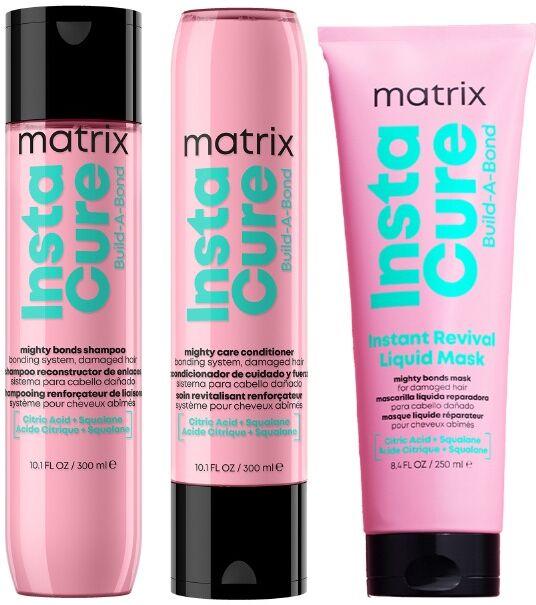
Matrix Instacure Build-A-Bond Mighty Bonds PackStock up and save with this Matrix Instacure Build-A-Bond Mighty Bonds Shampoo 300ml, Instacure Build-A-Bond Mighty Care Conditioner 300ml and Instacure Build-A-Bond Instant Revival Liquid Mask 250ml Pack! Healthy hair starts from within, and this Matrix Instacure Build-A-Bond Mighty Bonds Shampoo, Conditioner and mask get straight to work. The luxuriously textured shampoo forms a rich lather and gets to work immediately on mega damaged hair and the luxuriously creamy conditioner gets straight to work with key ingredient Squalane, which works on the hairs surface to soften and smooth each strand for a silky finish! The instant revival mask has an innovative liquid texture and repairs and strengthens hair from within. Suitable for color-treated and highlighted hair. All are infused with citric acid, this conditioner penetrates deep into the hair fiber to strengthen and reinforce damaged hair strands from within. Ingredients: Shampoo: aqua / water / eau, decyl glucoside, sodium cocoyl isethionate, cocamidopropyl betaine, citric acid, sodium hydroxide, panthenol, parfum / fragrance, glycerin, dimethicone, peg-150 distearate, ppg-5-ceteth-20, sodium benzoate, sodium chloride, peg-55 propylene glycol oleate, propylene glycol, carbomer, limonene, coco-caprylate/caprate, polyquaternium-67, salicylic acid, amodimethicone, sodium phytate, glycol distearate, squalane, coco-betaine, linalool, acrylates/beheneth-25 methacrylate copolymer, citronellol, trideceth-6, benzyl alcohol, alcohol, cetrimonium chloride, ci 17200 / red 33 Conditioner: aqua / water / eau, cetearyl alcohol, propylene glycol, behentrimonium chloride, glycerin, cetyl esters, dimethicone, peg/ppg-4/12 dimethicone, amodimethicone, parfum / fragrance, isopropyl alcohol, dicetyldimonium chloride, citric acid, phenoxyethanol, limonene, isopropyl myristate, hydroxypropyl guar, squalane, linalool, trideceth-10, coco-betaine, citronellol, cetrimonium chloride, peg-100 stearate, steareth-6, sodium chloride, benzyl alcohol, trideceth-3, acetic acid, trisodium hedta, pentaerythrityl tetra-di-t-butyl hydroxyhydrocinnamate, ci 17200 / red 33 Mask: aqua / water / eau, cetearyl alcohol, behentrimonium chloride, dimethicone, isopropyl alcohol, amodimethicone, sodium citrate, glycerin, citric acid, c15-19 alkane, dicetyldimonium chloride, parfum / fragrance, aminopropyl dimethicone, phenoxyethanol, cetyl esters, hydroxypropyl guar, limonene, squalane, trideceth-6, linalool, dilauryl thiodipropionate, cetrimonium chloride, citronellol, benzyl alcohol, trisodium hedta, ci 17200 / red 3339,60 £*Shipping: 0,00 £Secure redirect to the provider
-
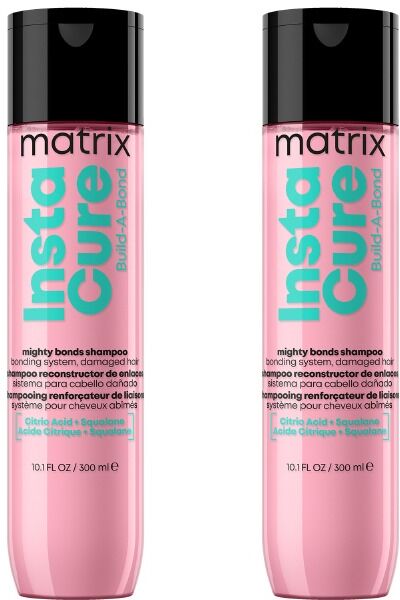
Matrix Instacure Build-A-Bond Mighty Bonds Shampoo 300ml DoubleStock up and save on professional results at home with this double Matrix Instacure Build-A-Bond Mighty Bonds Shampoo! (Includes 2 x 300ml Shampoo) Healthy hair starts from within, and this Matrix Instacure Build-A-Bond Mighty Bonds Shampoo gets straight to work This luxuriously textured shampoo forms a rich lather and gets to work immediately on mega damaged hair. Key ingredients include Citric acid, which penetrates deep into the hair fiber to strengthen and repair your hair from within. It's also infused with Squalane, which works on the hair's surface to soften and smooth every strand! Ingredients: AQUA / WATER / EAU, DECYL GLUCOSIDE, SODIUM COCOYL ISETHIONATE, COCAMIDOPROPYL BETAINE, CITRIC ACID, SODIUM HYDROXIDE, PANTHENOL, PARFUM / FRAGRANCE, GLYCERIN, DIMETHICONE, PEG-150 DISTEARATE, PPG-5-CETETH-20, SODIUM BENZOATE, SODIUM CHLORIDE, PEG-55 PROPYLENE GLYCOL OLEATE, PROPYLENE GLYCOL, CARBOMER, LIMONENE, COCO-CAPRYLATE/CAPRATE, POLYQUATERNIUM-67, SALICYLIC ACID, AMODIMETHICONE, SODIUM PHYTATE, GLYCOL DISTEARATE, SQUALANE, COCO-BETAINE, LINALOOL, ACRYLATES/BEHENETH-25 METHACRYLATE COPOLYMER, CITRONELLOL, TRIDECETH-6, BENZYL ALCOHOL, ALCOHOL, CETRIMONIUM CHLORIDE, CI 17200 / RED 3324,16 £*Shipping: 0,00 £Secure redirect to the provider
-
Matrix Instacure Build-A-Bond Mighty Bonds Full Routine PackYou deserve the full package! So, what are you waiting for? Stock up and save on this Mega Pack from Matrix, including: Instacure Build-A-Bond Mighty Bonds Shampoo 300ml, Conditioner 300ml, Instant Revival Liquid Mask 250ml, Super Sealing Leave-In Balm 75ml, Anti Breakage Leave-In 150ml. Healthy hair starts from within, and all of these Matrix Instacure Build-A-Bond Might Bond products heal your locks from the inside out! All five products are infused with citric acid, which penetrates deep into the hair fiber to strengthen and reinforce damaged hair strands from within. Ingredients: Shampoo: aqua / water / eau, decyl glucoside, sodium cocoyl isethionate, cocamidopropyl betaine, citric acid, sodium hydroxide, panthenol, parfum / fragrance, glycerin, dimethicone, peg-150 distearate, ppg-5-ceteth-20, sodium benzoate, sodium chloride, peg-55 propylene glycol oleate, propylene glycol, carbomer, limonene, coco-caprylate/caprate, polyquaternium-67, salicylic acid, amodimethicone, sodium phytate, glycol distearate, squalane, coco-betaine, linalool, acrylates/beheneth-25 methacrylate copolymer, citronellol, trideceth-6, benzyl alcohol, alcohol, cetrimonium chloride, ci 17200 / red 33 Conditioner: aqua / water / eau, cetearyl alcohol, propylene glycol, behentrimonium chloride, glycerin, cetyl esters, dimethicone, peg/ppg-4/12 dimethicone, amodimethicone, parfum / fragrance, isopropyl alcohol, dicetyldimonium chloride, citric acid, phenoxyethanol, limonene, isopropyl myristate, hydroxypropyl guar, squalane, linalool, trideceth-10, coco-betaine, citronellol, cetrimonium chloride, peg-100 stearate, steareth-6, sodium chloride, benzyl alcohol, trideceth-3, acetic acid, trisodium hedta, pentaerythrityl tetra-di-t-butyl hydroxyhydrocinnamate, ci 17200 / red 33 Mask: aqua / water / eau, cetearyl alcohol, behentrimonium chloride, dimethicone, isopropyl alcohol, amodimethicone, sodium citrate, glycerin, citric acid, c15-19 alkane, dicetyldimonium chloride, parfum / fragrance, aminopropyl dimethicone, phenoxyethanol, cetyl esters, hydroxypropyl guar, limonene, squalane, trideceth-6, linalool, dilauryl thiodipropionate, cetrimonium chloride, citronellol, benzyl alcohol, trisodium hedta, ci 17200 / red 33 Leave-In Balm: aqua / water / eau, dimethicone, cetearyl alcohol, amodimethicone, phenoxyethanol, polyquaternium-37, dimethiconol, trideceth-5, propylene glycol dicaprylate/dicaprate, steareth-20, cetyl hydroxyethylcellulose, parfum / fragrance, glycerin, citric acid, limonene, ppg-1 trideceth-6, trideceth-10, squalane, sodium hydroxide, linalool, chlorhexidine digluconate, acrylates/stearyl methacrylate copolymer, sorbitan oleate, acetic acid, citronellol, hydrated silica, silica dimethyl silylate, disodium phosphate, benzyl alcohol, sodium phosphate, edta, ci 17200 / red 33 Anti Breakage Leave-In: aqua / water / eau, dimethicone, cetearyl alcohol, amodimethicone, phenoxyethanol, polyquaternium-37, dimethiconol, trideceth-5, propylene glycol dicaprylate/dicaprate,...70,48 £*Shipping: 0,00 £Secure redirect to the provider
-
Matrix Instacure Build-A-Bond Mighty Bonds Shampoo 300ml & Instacure BStock up and save with this Matrix Instacure Build-A-Bond Mighty Bonds Shampoo 300ml & Instacure Build-A-Bond Mighty Care Conditioner 300ml Duo! Healthy hair starts from within, and this Matrix Instacure Build-A-Bond Mighty Bonds Shampoo and Conditioner gets straight to work to repair your hair. The luxuriously textured shampoo forms a rich lather and gets to work immediately on mega damaged hair and the luxuriously creamy conditioner gets straight to work with key ingredient Squalane, which works on the hairs surface to soften and smooth each strand for a silky finish! Both are infused with citric acid, this conditioner penetrates deep into the hair fiber to strengthen and reinforce damaged hair strands from within. Ingredients: Shampoo: aqua / water / eau, decyl glucoside, sodium cocoyl isethionate, cocamidopropyl betaine, citric acid, sodium hydroxide, panthenol, parfum / fragrance, glycerin, dimethicone, peg-150 distearate, ppg-5-ceteth-20, sodium benzoate, sodium chloride, peg-55 propylene glycol oleate, propylene glycol, carbomer, limonene, coco-caprylate/caprate, polyquaternium-67, salicylic acid, amodimethicone, sodium phytate, glycol distearate, squalane, coco-betaine, linalool, acrylates/beheneth-25 methacrylate copolymer, citronellol, trideceth-6, benzyl alcohol, alcohol, cetrimonium chloride, ci 17200 / red 33 Conditioner: aqua / water / eau, cetearyl alcohol, propylene glycol, behentrimonium chloride, glycerin, cetyl esters, dimethicone, peg/ppg-4/12 dimethicone, amodimethicone, parfum / fragrance, isopropyl alcohol, dicetyldimonium chloride, citric acid, phenoxyethanol, limonene, isopropyl myristate, hydroxypropyl guar, squalane, linalool, trideceth-10, coco-betaine, citronellol, cetrimonium chloride, peg-100 stearate, steareth-6, sodium chloride, benzyl alcohol, trideceth-3, acetic acid, trisodium hedta, pentaerythrityl tetra-di-t-butyl hydroxyhydrocinnamate, ci 17200 / red 3324,16 £*Shipping: 0,00 £Secure redirect to the provider
-
What are the differences between covalent bonds, metallic bonds, and ionic bonds?
Covalent bonds are formed when two atoms share electrons, resulting in a strong bond between the atoms. Metallic bonds occur between metal atoms, where the electrons are delocalized and free to move throughout the structure, creating a strong bond. Ionic bonds are formed between a metal and a nonmetal, where one atom transfers electrons to the other, resulting in the formation of positively and negatively charged ions that are attracted to each other. Overall, covalent bonds involve electron sharing, metallic bonds involve electron delocalization, and ionic bonds involve electron transfer. **
-
Do CO bonds form with other CO bonds?
No, CO bonds do not typically form with other CO bonds. Carbon monoxide (CO) is a stable molecule with a triple bond between the carbon and oxygen atoms. This triple bond is strong and does not readily form additional bonds with other CO molecules. Instead, CO molecules tend to interact with other types of molecules through various types of chemical reactions. **
-
Why are intermolecular bonds weaker than electron pair bonds?
Intermolecular bonds are weaker than electron pair bonds because they involve interactions between molecules rather than within a single molecule. In intermolecular bonds, the attractive forces between molecules are generally weaker than the covalent bonds that hold atoms together within a molecule. Additionally, intermolecular bonds are typically temporary and can be easily broken, whereas electron pair bonds are strong and stable. Overall, the weaker nature of intermolecular bonds allows molecules to move and interact with each other more freely. **
-
Why are intermolecular bonds generally weaker than covalent bonds?
Intermolecular bonds are generally weaker than covalent bonds because they involve interactions between molecules rather than within a single molecule. Covalent bonds involve the sharing of electrons between atoms, creating strong bonds within a molecule. In contrast, intermolecular bonds, such as hydrogen bonds or van der Waals forces, are weaker because they are based on temporary interactions between molecules, which can be easily broken. Additionally, intermolecular bonds are influenced by factors such as distance and orientation, further contributing to their weaker nature compared to covalent bonds. **
Similar search terms for Bonds
-
Uplifted Finds Cognitive Challenge Interactive Puzzle Station Cognitive Challenge Interactive Puzzle StationTransform mealtime into a stimulating mental workout with the CognitiveChallenge Puzzle Station, a highutility enrichment module engineered with progressivedifficulty logic. This professionalgrade feeder features a multichambered architecture that...119,97 $*Shipping: 0,00 $Secure redirect to the provider
-
Viper The Twyford Code by Janice Hallett - Award-Winning Crime Thriller - Paperback - Sunday Times Bestseller, Puzzle MysteryThe Twyford Code by Janice Hallett is a Sunday Times bestselling puzzle-thriller, crowned Crime and Thriller Book of the Year at the British Book Awards 2023. This ingenious mystery follows Steven Smith as he retraces a childhood discovery that changed his life forever. Told through a collection of transcribed audio files, it blends nostalgic children's-book intrigue with a razor-sharp modern investigation. The story begins with Steven Smith, a boy in a school for children with learning difficulties, who finds a battered copy of a novel by disgraced children's author Edith Twyford. The margins of the book are filled with strange, indecipherable annotations that fascinate Steven. He brings the book to his English teacher, Miss Iles, who becomes convinced the markings form a hidden code pointing to a long-buried secret. This is a must-read for fans of clever, code-cracking crime fiction and immersive book club discussions. Published by Viper, a division of Profile Books, this paperback edition features the ISBN 9781788165334.5,99 £*Shipping: 2,99 £Secure redirect to the provider
-
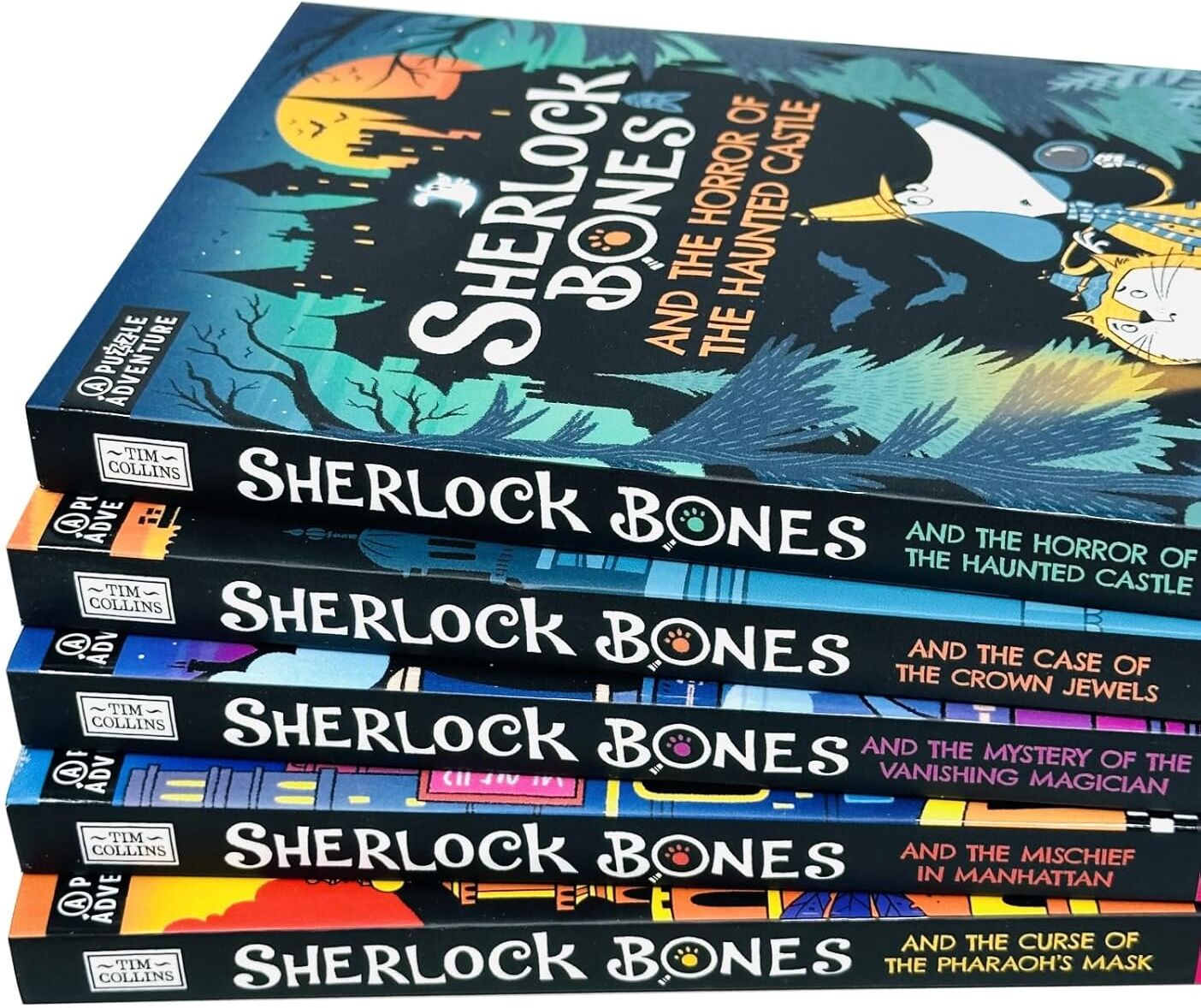
Buster Books Sherlock Bones Puzzle Quest 5 Books Set by Tim Collins, Illustrated by John Bigwood - Paperback - Ages 7-9 - Puzzle Mystery StoriesGet ready to solve the mystery with the Sherlock Bones Puzzle Quest 5 Books Collection Set by Tim Collins. This engaging series is perfect for young readers aged 7-9, who will become detectives-in-training as they follow the adventures of world-famous canine investigator Sherlock Bones and his sharp-witted feline sidekick Dr Jane Catson. The five-book set includes Sherlock Bones and the Case of the Crown Jewels, Sherlock Bones and the Mystery of the Vanishing Magician, Sherlock Bones and the Curse of the Pharaoh's Mask, Sherlock Bones and the Horror of the Haunted Castle, and Sherlock Bones and the Mischief in Manhattan. Each book is filled with over thirty interactive puzzles, including mazes, spot-the-difference, and silhouette matches, making this a genuinely interactive reading adventure that will keep children turning pages long past bedtime. The books are beautifully illustrated by John Bigwood and published by Buster Books.14,99 £*Shipping: 2,99 £Secure redirect to the provider
-
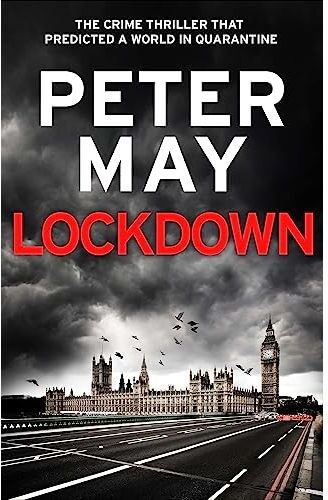
Riverrun Lockdown by Peter May Thriller Novel Set During a Global Pandemic – Crime, Mystery & Suspense - Gripping Crime & Mystery Thriller Set in LondonLockdown by Peter May: An incredibly prescient crime thriller from the author of The Lewis Trilogy Lockdown by bestselling author Peter May is a chilling and timely thriller set in a London under quarantine during a deadly global pandemic. Originally written years before COVID-19 and rejected for being “too unrealistic,” this novel is now recognised as a strikingly prophetic crime story. When a child’s bones are discovered at a construction site, detective Jack MacNeil must solve the case before his final shift ends — all while the city is paralysed by fear, restricted movement, and escalating danger. As MacNeil races against time, he uncovers corruption, conspiracy, and a threat far larger than he imagined.Fast-paced, atmospheric, and gripping, Lockdown is perfect for readers of: Crime thrillers Pandemic fiction Police procedural mysteries High-tension suspense A must-read for fans of Peter May, Michael Connelly, Ian Rankin, and Mark Billingham.4,99 £*Shipping: 1,99 £Secure redirect to the provider
-
Why are intermolecular bonds typically weaker than covalent bonds?
Intermolecular bonds are typically weaker than covalent bonds because they involve interactions between molecules rather than within a single molecule. In intermolecular bonds, the attractive forces between molecules, such as van der Waals forces or hydrogen bonding, are weaker than the strong sharing of electrons in covalent bonds. Additionally, intermolecular bonds are more easily broken or disrupted by changes in temperature or pressure, leading to lower bond energies compared to covalent bonds. **
-
Why are intermolecular bonds generally weaker than electron pair bonds?
Intermolecular bonds are generally weaker than electron pair bonds because they involve interactions between molecules, which are larger and less localized than the interactions between atoms in a covalent bond. In intermolecular bonds, the attractive forces are typically weaker due to the larger distance between molecules and the lack of direct sharing of electrons. In contrast, electron pair bonds involve the sharing of electrons between atoms, leading to stronger and more localized bonding interactions. **
-
Why are intermolecular bonds typically weaker than electron pair bonds?
Intermolecular bonds are typically weaker than electron pair bonds because they involve interactions between molecules rather than within a single molecule. In intermolecular bonds, the attractive forces between molecules are generally weaker than the covalent bonds that hold atoms together within a molecule. Additionally, intermolecular bonds are usually based on weaker forces such as van der Waals forces, hydrogen bonding, or dipole-dipole interactions, which are not as strong as the sharing or transfer of electrons in covalent or ionic bonds. **
-
Why are polar bonds lower in energy than nonpolar bonds?
Polar bonds are lower in energy than nonpolar bonds because they involve the unequal sharing of electrons between two atoms with different electronegativities. This unequal sharing creates a dipole moment, which results in an attractive force between the partially positive and partially negative ends of the molecule. This electrostatic attraction lowers the overall energy of the molecule compared to nonpolar bonds, where electrons are shared equally. As a result, polar bonds are typically stronger and more stable than nonpolar bonds. **
* All prices are inclusive of VAT and, if applicable, plus shipping costs. The offer information is based on the details provided by the respective shop and is updated through automated processes. Real-time updates do not occur, so deviations can occur in individual cases. ** Note: Parts of this content were created by AI.